

Stainless Steel Turnbuckles – Selection & Use Guide
Stainless steel turnbuckles are precision tensioning devices used to adjust the length and tension of wire rope, chains, and cables. They are widely used in marine, due to
1. Turnbuckle Ty
1.1 Common End Fittings
Different end fittings are suitable for different connection methods:
Eye–Eye Turnbuckle
For permanent, secure connections with shackles, thimbles, wire rope, or bolts.Hook–Hook Turnbuckle
For quick connections where loads are lighter and non-critical.Jaw–Jaw Turnbuckle
Ideal for connecting to fixed points, eye bolts, wall plates, or wire rope thimbles.Eye–Jaw / Hook–Eye
Mixed combination for flexible installation.
1.2 Body Styles
Open Body Turnbuckle
Easy inspection of threads; widely used in rigging.Closed Body Turnbuckle (Architectural Turnbuckle)
Clean appearance, sleek design, ideal for architectural cables and stainless steel balustrades.
2. How to Select the Right Stainless Steel Turnbuckle
2.1 Choose Material Grade
304 Stainless Steel
Suitable for indoor, architecture, and light outdoor use.316 Stainless Steel
Best for marine environments, chemical plants, coastal regions, and harsh weather.
2.2 Determine Working Load Requirements
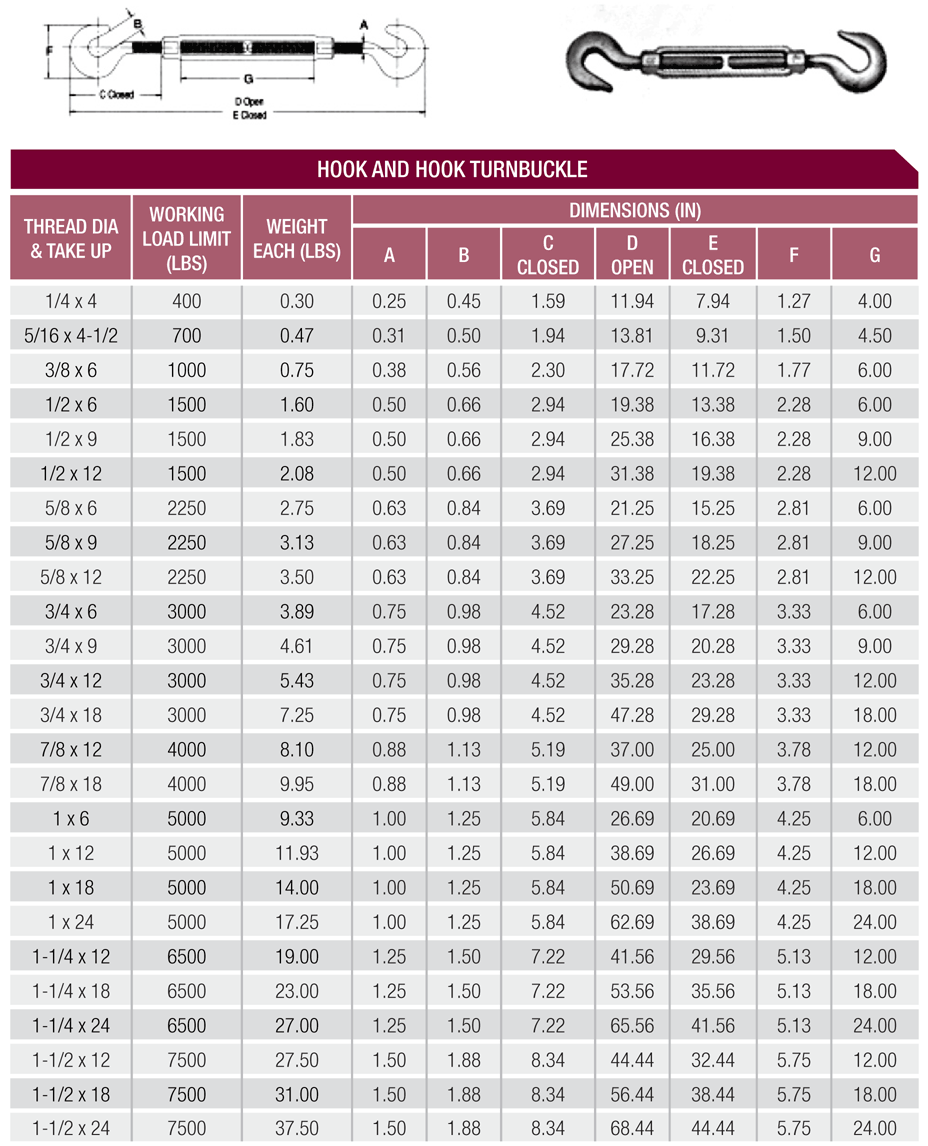
Each turnbuckle has a Working Load Limit (WLL).
Choose a turnbuckle with 20–30% higher load rating than your expected tension load.
For lifting applications, only use certified rigging hardware.
2.3 Match Turnbuckle Size to Rope or Cable
Turnbuckle size must match:
Wire rope diameter
Thread diameter
Pin size (for jaw type)
Example:
Wire rope 6 mm → Use M6–M8 turnbuckle
Wire rope 10 mm → Use M10–M12 turnbuckle
2.4 Choose the Proper End Fitting for Installation
Eye fittings: use with shackles, bolts, anchors
Hook fittings: for temporary tensioning
Jaw fittings: secure connection to fixed plates or thimbles
2.5 Check Thread Type
Right/Left threaded ends allow controlled tension adjustment
Ensure smooth threading before use
3. How to Use Stainless Steel Turnbuckles Safely
3.1 Installation Steps
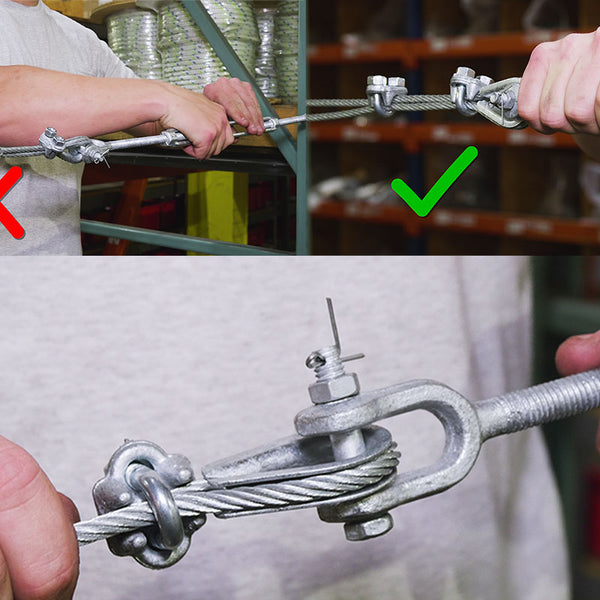
Open the turnbuckle by rotating the body to extend both end fittings evenly.
Attach the two ends (jaw, eye, or hook) to the correct connection points.
Begin turning the body to tighten tension.
Keep both threaded ends inserted by at least 80% of their total length to avoid failure.
For critical installations, use locking pins or safety wires.
3.2 Avoid Common Mistakes
Do not use hook–hook types for heavy or critical loads.
Do not expose threads to cross-loading or bending forces.
Do not over-tighten — this may stretch or deform the fittings.
Do not use in lifting people or life-safety applications unless certified.
3.3 Maintenance
Rinse with freshwater after marine use.
Apply anti-seize lubricant to stainless steel threads to prevent galling.
Inspect regularly for wear, bending, or corrosion.
4. Applications of Stainless Steel Turnbuckles
Marine & Offshore
Sailboat rigging
Mooring & tension systems
Deck cable adjustments
Construction & Industrial
Load securing
Pipe supports
Machinery alignment
architecture & Decoration
Stainless cable railing / balustrade
Shade sails & outdoor tension structures
Wire rope suspension systems
Transport & Logistics
Cargo securing
Trailer tension systems
5. Technical Specification Template
| Model | Material | Type | Thread Size | End Fittings | WLL | Application |
|---|---|---|---|---|---|---|
| HT-01 | 304 SS | Open Body | M6 | Eye–Eye | 120 kg | Shade sail / railing |
| HT-02 | 316 SS | Open Body | M10 | Jaw–Jaw | 450 kg | Marine rigging |
| HT-03 | 316 SS | Closed Body | M12 | Eye–Jaw | 600 kg | Architectural cables |