
Stainless steel pulleys are widely used in marine, construction, lifting, industrial, and outdoor applications because of their corrosion resistance, durability, and smooth load movement. This guide helps users choose the right pulley and use it safely.
1. How to Select the Right Stainless Steel Pulley
1.1 Determine the Type of Pulley Needed
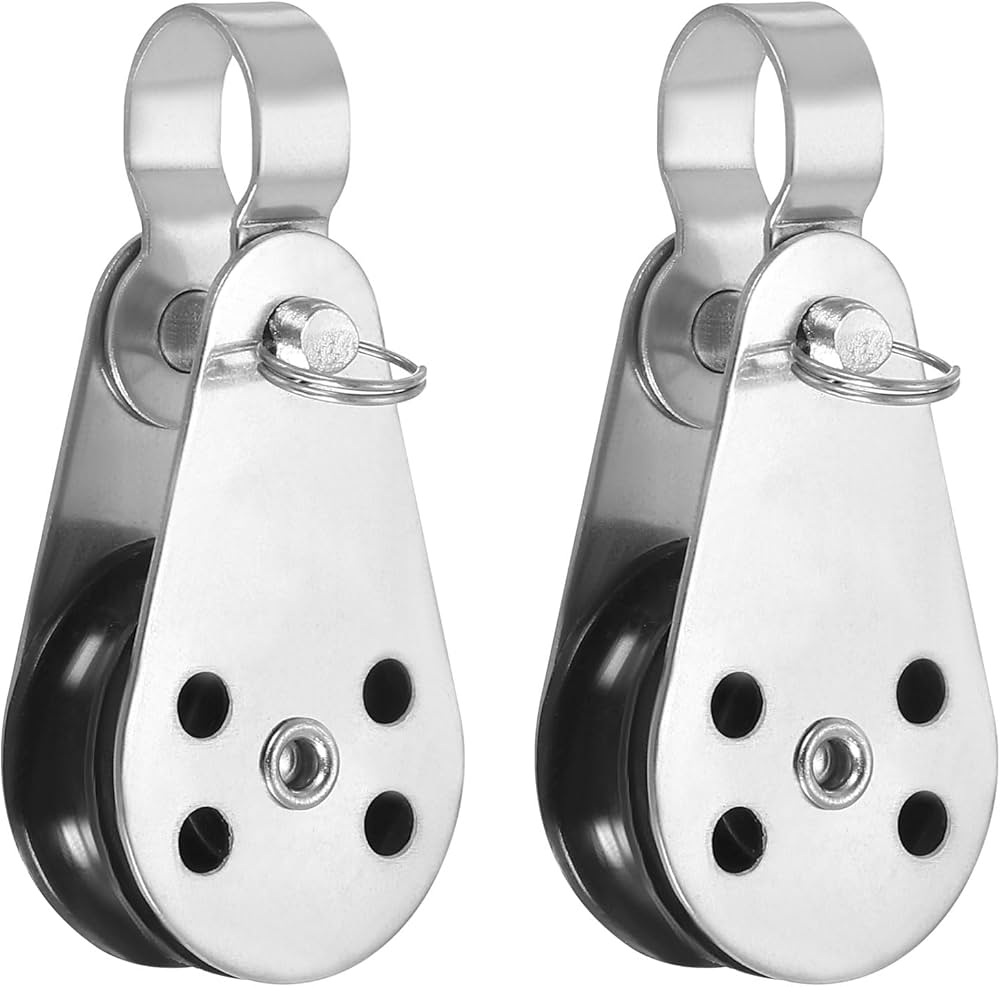
Common types:
-
Single Sheave Pulley – simple directional change
-
Double / Triple Sheave Pulley – increases mechanical advantage
-
Swivel Eye / Swivel Hook Pulley – prevents rope twisting
-
Fixed Eye Pulley – stable connection point
-
Pulley Block with Becket – allows multiple reeving options
1.2 Choose the Correct Material Grade
304 Stainless Steel
-
Suitable for indoor, light outdoor use
-
Good rust resistance
316 Stainless Steel
-
Best choice for marine, chemical, humid, and saltwater environments
-
Superior corrosion resistance
1.3 Match the Pulley with Rope or Wire Diameter
-
Ensure the sheave groove matches rope size
-
Rope too small → slips and wears fast
-
Rope too large → cannot rotate smoothly
Example matching:
-
Pulley groove: Ø10 mm → Use rope 8–10 mm
-
Wire rope requires a V-groove or U-groove sheave
1.4 Load Capacity (Working Load Limit, WLL)

-
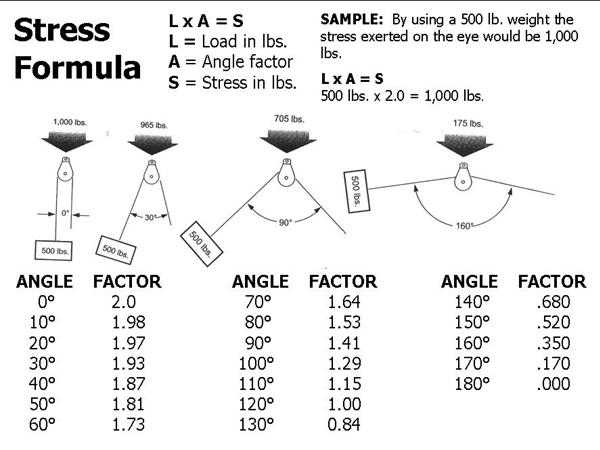
Always check WLL on product label or catalog
-
Select pulley with at least 20–30% higher capacity than expected load
-
Higher load → choose heavy-duty stainless steel block
1.5 Bearing Type Matters
-
Plain Bearing – economical, light load
-
Ball Bearing – smoother, for frequent movement
-
Roller Bearing – heavy-duty, industrial lifting
1.6 Installation Method
Depending on the application, choose:
-
Eye pulley – attach to anchor points
-
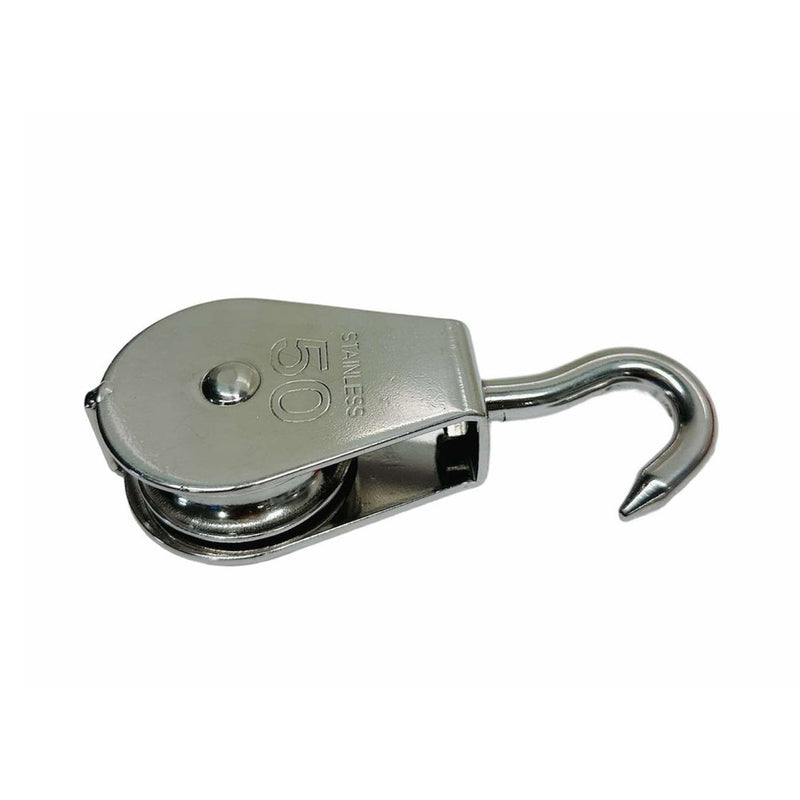
Hook pulley – quick connect/disconnect
-
Swivel pulley – for dynamic movement
-
Carabiner-compatible pulley – climbing & rescue
2. How to Use Stainless Steel Pulleys Safely
2.1 Correct Rope Routing


-
Ensure rope sits properly in the groove
-
Avoid cross-loading or side-pulling
-
Keep the rope surface clean (no sand/metal particles)
2.2 Avoid Overloading
-
Never exceed WLL
-
If lifting people (rescue, climbing), use certified pulleys only (EN/ANSI standards)
2.3 Regular Inspection
Check before each use:
-
Sheave rotation smooth?
-
Any cracks, corrosion, deformation?
-
Bearing noise or resistance?
-
Eye or hook opening/stretching?
Replace immediately if damaged.
2.4 Proper Maintenance
-
Rinse with clean water after marine use
-
Lubricate bearings if applicable (avoid excess grease in sandy areas)
-
Store in dry place
3. Typical Application Scenarios
Marine & Boating
-
Sail control lines
-
Anchoring systems
-
Boat lifting & rigging
Construction & Industry
-
Material lifting
-
Workshop hoisting
-
Conveyor positioning
Outdoor & General Use
-
Shade sail systems
-
Fitness and gym pulleys
-
DIY mechanical setups
-
Zipline or cable tensioning
4. Quick Selection Table
| Application | Recommended Type | Material Grade | Bearing | Rope Size |
|---|---|---|---|---|
| Marine rigging | Swivel pulley / double pulley | 316 SS | Ball | 8–12 mm |
| Construction lifting | Heavy-duty pulley block | 304/316 SS | Roller | 10–16 mm |
| Shade sail | Fixed eye pulley | 304 SS | Plain | 6–8 mm |
| Outdoor general use | Single pulley | 304 SS | Ball | 6–10 mm |
